 100% Kiwi-Owned
 Beat Local Price by 10%
 Discreet Packaging


At its core, a water-based lube is a personal lubricant where purified water is the main ingredient. It’s designed to feel just like your body's natural moisture, making it the most versatile and user-friendly choice out there.
So, What's the Big Deal with Water-Based Lube?
Think of it like a lightweight, hydrating moisturiser, but for your most intimate areas. Because the number one ingredient is purified water, it feels incredibly natural and gentle, which is a big win for most people. The formula gets absorbed by your skin, giving you a smooth glide without leaving behind any of that greasy or sticky feeling.
Its simple, water-soluble nature is exactly why it’s become the gold standard for compatibility and ease of use. This isn't just a hunch; water-based products made up over 55% of the global personal lubricant market share back in 2021, and they’ve held that top spot ever since. If you're curious about the numbers, you can dive deeper into the trends in the global personal lubricant industry report.
The Main Benefits, Explained
The popularity of water-based formulas isn’t just a passing trend. It’s built on solid, practical advantages that work for a huge range of people, especially for Kiwis looking for reliable and body-safe options. These lubes are the dependable all-rounders of the pleasure world.
Here are the key reasons people keep coming back to water-based lube:
- Universal Compatibility: It’s 100% safe to use with all condoms (latex and polyisoprene included) and any sex toy, no matter what it’s made of—silicone, glass, or metal. This takes all the guesswork out of it and protects your favourite toys.
- Super Easy Cleanup: Because it’s water-soluble, it rinses off your skin with just water. No more worrying about stubborn stains on your sheets or clothes. A quick wash is all it takes.
- Perfect for Sensitive Skin: Good quality formulas are almost always hypoallergenic, fragrance-free, and pH-balanced to match your body’s natural chemistry, which seriously lowers the risk of any irritation.
The real magic of a water-based lubricant is in its simplicity. It enhances pleasure by working with your body, not against it, so you can forget about weird textures or a messy cleanup.
Why It's the Go-To Choice
At the end of the day, there’s a reason water-based lube is the top recommendation for beginners and seasoned users alike. It delivers a clean, natural-feeling glide that makes intimacy better without any fuss.
Whether you're flying solo, enjoying partnered sex, or bringing toys into the bedroom, it hits that perfect sweet spot between performance and practicality. Its straightforward approach puts comfort and safety first, making it a must-have for anyone looking to make those intimate moments smoother and more enjoyable.
Comparing Lube Types: Water vs Silicone vs Oil
Walking into the lube aisle can feel a bit overwhelming. With so many options—water, silicone, oil—how do you know which one is right for you? Each type has its own strengths, and the best choice really depends on what you've got planned. Let’s break down the practical differences to help you find the perfect partner for your intimate moments.
This little map highlights why water-based lube is such a popular go-to. It’s versatile, gentle, and a breeze to clean up.

As you can see, those three benefits make it the most user-friendly and adaptable option for almost any situation.
The Everyday All-Rounder: Water-Based Lube
If you’re looking for a lubricant that feels natural, works with everything, and won’t ruin your sheets, water-based lube is your answer. Its biggest selling point is its universal compatibility. It’s 100% safe to use with all condoms (both latex and non-latex) and every single sex toy you own, even your favourite silicone ones.
Because water is the main ingredient, it feels a lot like your body's own natural moisture, giving you a smooth, non-greasy glide. The only trade-off? It eventually absorbs into your skin or evaporates, so you might need to top it up during a longer session. For most people, that's a small price to pay for a lube that's easy to clean, doesn't stain, and is gentle enough for sensitive skin.
The Long-Distance Runner: Silicone-Based Lube
Now, let's say you're settling in for a marathon session and don't want to hit pause. This is where silicone-based lube really shines. The formula doesn't absorb into the skin, creating an incredibly slick, long-lasting barrier that’s perfect for extended play, anal sex, or fun in the shower, since it won't wash away easily.
But there's one golden rule with silicone: never use it with silicone sex toys. The silicone in the lube can react with the toy’s material, making it feel tacky and causing it to break down over time. Cleanup is also a bit more involved; you'll need soap and water to get it all off your skin and sheets.
The Natural Specialist: Oil-Based Lube
Finally, we have oil-based lubricants, like coconut or massage oils. They offer a rich, moisturising feel and can last a decent while, which makes them great for external massage and foreplay. Many people love them for their simple, often all-natural ingredients.
They do, however, come with some serious safety warnings. Oil can cause latex condoms to degrade and break, which is a massive risk you don’t want to take. They’re also famous for staining fabrics and can be a real mission to wash off completely. Because of this, oil-based products are generally not recommended for any kind of penetrative sex that involves condoms.
Choosing the right lubricant isn’t about finding one “best” type; it’s about matching the formula to the occasion. A water-based lube is your dependable daily driver, while silicone is the high-performance option for specific adventures.
If you're after the best of both worlds, some clever formulas blend different types together. You could explore something like a hybrid water-silicone blended lubricant, which aims to give you long-lasting slipperiness without the tricky cleanup.
To make the choice even clearer, here’s a quick-reference guide comparing the key features of each type.
Lubricant Type Comparison Chart
| Feature | Water-Based Lube | Silicone-Based Lube | Oil-Based Lube |
|---|---|---|---|
| Condom Safety | Excellent: Safe with latex and all other materials. | Good: Safe with latex and polyisoprene condoms. | Poor: Can degrade latex, causing condoms to fail. |
| Sex Toy Safety | Excellent: Safe for all toy materials, including silicone, glass, and metal. | Poor: Damages silicone toys over time. Safe with glass and metal. | Fair: Generally safe, but can degrade some softer materials. |
| Lasting Power | Fair: Absorbs into the skin and may require reapplication. | Excellent: Provides a very long-lasting glide. | Good: Lasts longer than water-based but less than silicone. |
| Cleanup | Excellent: Washes off easily with just water. Doesn't stain. | Fair: Requires soap and water. Can potentially stain fabrics. | Poor: Difficult to wash off. Stains sheets and clothing easily. |
| Feel & Texture | Natural, light, and non-greasy. Mimics the body's moisture. | Very slick, smooth, and velvety. Can feel slightly thicker. | Rich, moisturising, and can feel greasy or heavy. |
| Best For | Daily use, sensitive skin, toy play, quick and easy sessions. | Long sessions, anal sex, shower or water play. | External massage, foreplay (without condoms). |
Decoding Your Water Based Lube Ingredients
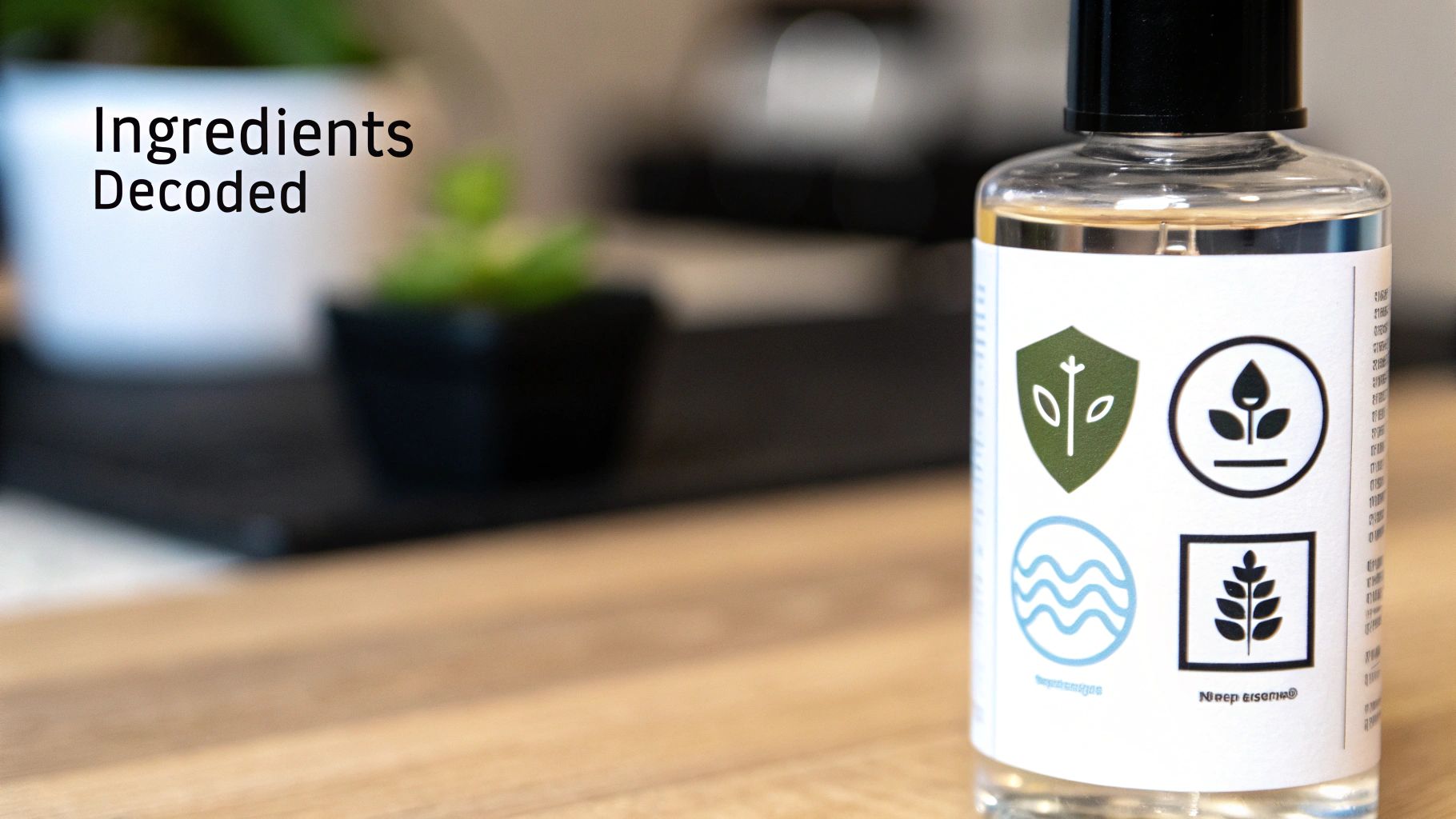
When you grab a bottle of water based lube, the first ingredient is a no-brainer—it’s always purified water. But what about the rest of that list? Thinking about what’s in your lubricant is just as important as reading a food label. After all, you deserve to know exactly what you’re putting on and in your body.
It helps to think of an ingredients list like a recipe. Each component has a specific job, whether it’s creating that silky-smooth texture, keeping the formula fresh, or just making sure it feels comfortable against your skin. Learning to decode this recipe is empowering; it helps you pick a high-quality, body-safe product that works for you.
This is especially true if you have sensitive skin or are prone to irritation. The right formula can be the difference between a good experience and a truly great one. Let’s break down the key players you’ll find inside the bottle.
The Role of Humectants Like Glycerin
Most water based lubes contain humectants—ingredients designed to attract and hold onto water. Their main job is to keep the lubricant moist and slippery for longer, stopping it from drying out too quickly during use. The most common one you’ll see is glycerin (sometimes listed as glycerine).
Glycerin is a type of sugar alcohol that’s really effective at its job, but it comes with a couple of potential catches. For some people, it can get a bit sticky as the water starts to evaporate. More importantly, because it's a sugar, it can sometimes upset the natural balance of vaginal flora, which may contribute to yeast infections in those who are susceptible.
This has led to a welcome rise in glycerin-free formulas. These products use other humectants to provide that smooth glide without the potential downsides, making them a fantastic choice for anyone with sensitive skin or a history of yeast infections.
Preservatives and Paraben-Free Options
Any product that contains water needs preservatives to stop bacteria, mould, and yeast from growing. This is a non-negotiable for safety. However, the type of preservative used really matters. For years, parabens (like methylparaben or propylparaben) were the go-to standard.
While they work, concerns have popped up about how parabens can mimic oestrogen in the body. The research is still ongoing, but many people now prefer to skip them just to be safe. This has paved the way for a huge range of paraben-free options.
When you're choosing a lubricant, "paraben-free" is a great sign that you’re looking at a modern, body-conscious formula. These products use alternative, gentler preservatives to keep things safe without adding unnecessary chemicals.
Keep an eye out for formulas that use preservatives like phenoxyethanol or potassium sorbate, which are widely considered to be gentler and safer for intimate use.
Why pH Balance Is So Important
One of the most critical—and often overlooked—factors for a body-safe water based lube is its pH level. The term 'pH' simply refers to how acidic or alkaline something is. A healthy vaginal environment has a naturally acidic pH, typically ranging from 3.8 to 4.5.
Using a lubricant that isn’t pH-balanced can throw this delicate ecosystem out of whack. If a product is too alkaline, it can disrupt your natural flora, creating an environment where bad bacteria can thrive. This can increase the risk of issues like bacterial vaginosis (BV).
Here’s what to look for on the label:
- pH-Balanced: This term is a clear signal that the product is made to match the natural vaginal pH.
- Hypoallergenic: While not a guarantee, these formulas are designed to minimise irritation, and pH balancing is a huge part of that.
- Citric Acid: Seeing this on the ingredients list is often a good thing. It’s a common ingredient used to lower a formula's pH into that ideal acidic range.
Choosing a pH-balanced lubricant is one of the easiest ways to protect your intimate health and comfort. It helps your body maintain its natural defences, letting you relax and enjoy yourself without worrying about irritation later.
How to Choose the Right Water-Based Lube for You
Navigating the world of personal lubricants can feel a bit overwhelming at first. But finding the perfect water-based lube is really just about matching a formula to your unique body and what you're looking for in the bedroom.
Think of it like choosing a skincare product. You wouldn't just grab any old bottle off the shelf; you'd look for one that suits your skin, whether it's sensitive, dry, or something in between. The same idea applies here. A little thought goes a long way in making sure every experience is as comfortable and enjoyable as possible.
Let's break down how to pick the right water-based lube based on your specific needs, so you can make a choice you feel great about.
For Sensitive Skin
If your skin is prone to irritation, the ingredients list is your best friend. The goal is to find a formula that's as simple and gentle as possible, steering clear of common troublemakers that can throw your body's natural balance out of whack.
For maximum comfort, look for products that are:
- Glycerin-Free: As we've touched on, glycerin is a type of sugar alcohol. For some people, it can lead to stickiness or create an environment where yeast infections are more likely to pop up. A glycerin-free formula takes that worry off the table.
- Paraben-Free: Choosing a lube without parabens is an easy way to avoid unnecessary chemicals that some studies suggest could interfere with hormones.
- Fragrance-Free: Those added scents and flavours? They're often the number one cause of irritation and allergic reactions. Always opt for an unscented product to keep things simple and safe.
- pH-Balanced: This is a big one for sensitive skin. A formula with a pH between 3.8 and 4.5 is in harmony with the natural vaginal environment, which helps prevent disruption and discomfort.
When in doubt, look for labels like "hypoallergenic" or "dermatologically tested." These are good signs that the product has been designed with sensitivity in mind.
For Long-Lasting Play
One of the few downsides of a standard water-based lube is that it can sometimes dry out during longer sessions. Because it absorbs into the skin and evaporates, you might find yourself needing to reapply. But not all formulas are created equal.
If you want a lubricant with a bit more staying power, look for a thicker, more viscous consistency. These formulas are made to provide a more durable cushion and a glide that lasts, meaning you don't have to pause the action to top up.
A thicker water-based lube creates a more substantial barrier on the skin's surface, which slows down how quickly it absorbs and evaporates. This gives you a slickness that lasts much longer without sacrificing the easy cleanup and universal compatibility you love.
Consider a gel-style formula over a thin, watery liquid. They often feel more luxurious and provide the endurance needed for marathon sessions, anal play, or any time you just don't want the fun to stop.
For Natural Preferences
If you prefer to use organic, vegan, or plant-based products in your day-to-day life, you're in luck. The lubricant market is full of fantastic options that use high-quality, ethically sourced ingredients that are kind to both your body and the planet.
When you're looking for a natural lube, keep an eye out for:
- Organic Ingredients: Certifications from reputable bodies mean the ingredients were grown without synthetic pesticides or fertilisers. Botanicals like aloe vera and flax extract are popular choices for their naturally soothing and hydrating properties.
- Vegan Formulas: This is your guarantee that no animal products or by-products were used to make the lube.
- Minimalist Formulas: The fewer ingredients, the better. A simple, clean list often points to a high-quality product that isn't relying on cheap fillers.
For Specific Activities
Different activities often benefit from slightly different formulations. For vaginal sex, a pH-balanced, glycerin-free lube is the perfect choice for maintaining intimate health. If you're after a great all-rounder, a product like this glycerin-free water-based lubricant is an excellent choice for solo play, partnered fun, and with your favourite toys.
For anal play, a thicker, gel-like water-based lube is highly recommended. The tissues in this area don't self-lubricate, so a more robust and long-lasting formula provides the extra comfort and protection needed for a pleasurable, safe experience. No matter the activity, choosing the right texture can make all the difference.
Practical Tips for Using and Storing Your Lube
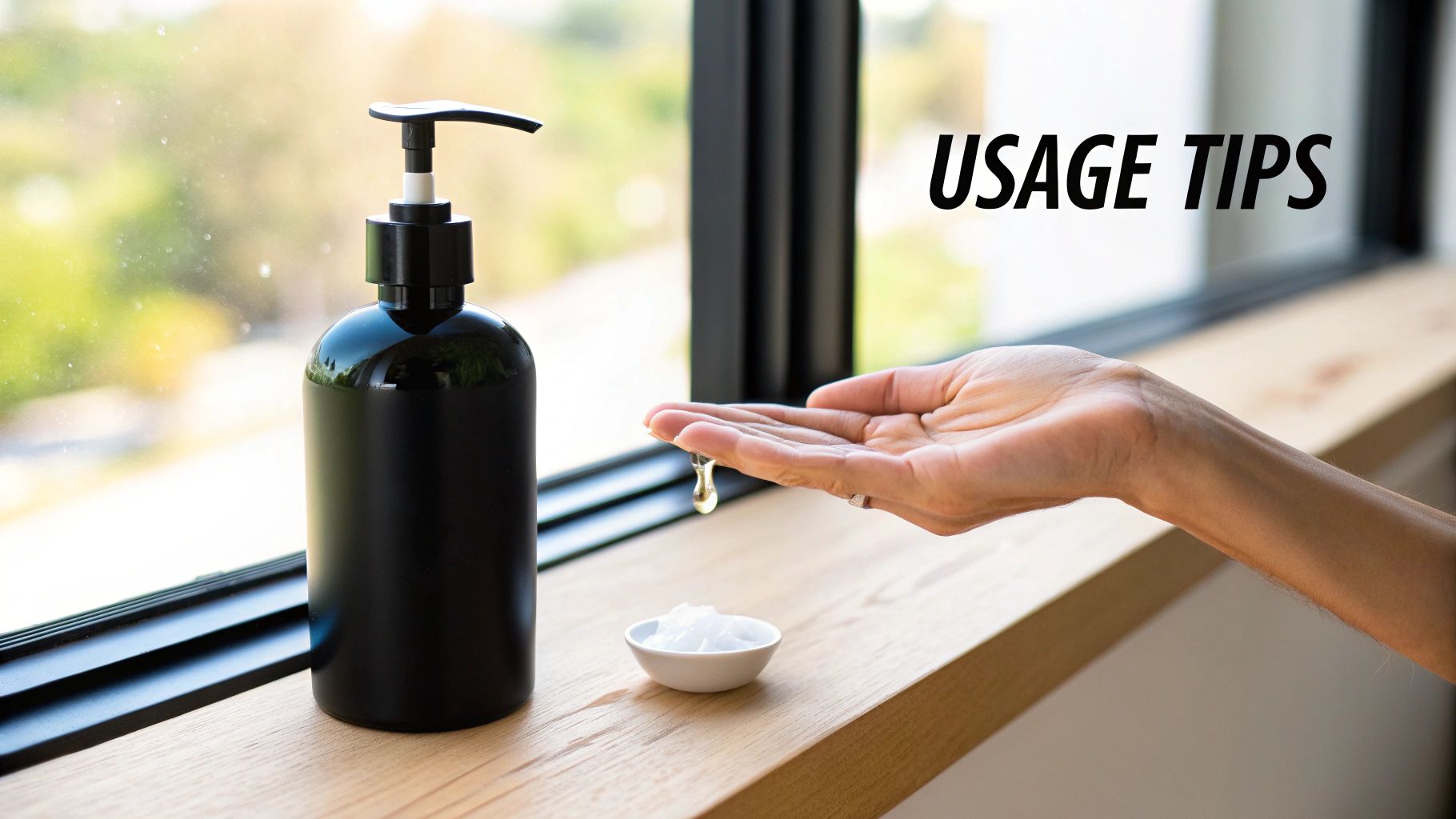
Knowing what’s in your water-based lube is a great start, but understanding how to actually use it is what turns a good time into a great one. Getting the application, reapplication, and storage right means you'll get maximum comfort and pleasure from every single bottle.
Think of these tips as the simple instructions that unlock your product’s full potential. A little know-how can make all the difference, helping you feel more confident and prepared for any intimate moment, whether you're alone or with a partner.
Application Best Practices
Getting the most out of your lubricant starts with how you put it on. Here’s a simple but game-changing trick: warm it up first. Squeeze a small amount into your palm and rub your hands together for a few seconds. This brings it closer to body temperature, preventing any chilly surprises and making it feel much more natural against your skin.
When it comes to how much to use, a good rule of thumb is to start with a dollop about the size of a ten-cent coin. It’s always easier to add more if you need it than to deal with a slippery mess. You can apply it directly to the body, a sex toy, or a condom for a smooth, comfortable glide right from the start.
The goal is to reduce friction, not get rid of sensation altogether. Start small and add more as you go. This approach keeps you in control and makes sure you have the perfect level of slickness for whatever you're up to.
The Art of Reapplication
One of the key things about water-based lube is that it naturally absorbs into the skin and evaporates over time. This is completely normal! Rather than seeing this as a pain, think of reapplication as part of the fun—just a quick pause to keep things feeling amazing.
Don't be shy about reaching for the bottle again. If you feel things starting to get a bit tacky or dry, simply add a few more drops. This is especially important during longer sessions. A great pro-tip is to keep a small spray bottle of water nearby; a quick spritz can actually reactivate the lube that's already there, instantly restoring its slipperiness without needing to add more product.
Simple Cleanup and Storage
Honestly, one of the best things about water-based lube is how ridiculously easy it is to clean up. Because it’s water-soluble, it won't leave behind any of those stubborn, greasy stains on your sheets or clothes. Just pop them in your regular laundry cycle and you're sorted. On skin, it rinses off effortlessly with a bit of warm water.
Proper storage is also key to keeping your lubricant effective and safe.
- Keep it Cool and Dark: Store your lube somewhere out of direct sunlight, like a bedside drawer or a cupboard. Heat and light can break down the ingredients and mess with the formula’s consistency.
- Check the Expiry Date: Just like any personal care product, lube has a shelf life. Always have a quick look at the date on the bottle to make sure it’s still good to go.
- Keep Your Toys Clean: After the fun is over, cleaning your toys is crucial for good hygiene. For an effective and body-safe solution, an unscented antibacterial toy cleaner is perfect for keeping them in top condition for next time.
Your Water Based Lube Questions Answered
Even after reading up on the options, it's totally normal to have a few more questions rattling around. When it comes to something as personal as lube, you want to feel 100% confident in your choice. Think of this as your go-to guide for the most common queries we hear from Kiwis.
We'll jump straight into the big questions, giving you clear, practical answers to help clear up any lingering doubts. From condom compatibility to clean-up, let's make sure you've got all the facts.
Is Water Based Lube Safe with All Condoms and Toys?
Yes, absolutely. This is the number one reason water based lube is so widely recommended—it offers complete peace of mind. Its formula plays nicely with every type of condom material out there, including latex and polyisoprene, so you never have to worry about it causing any damage or weakening them.
The same goes for sex toys. A water based lubricant is 100% safe for all toy materials, from silky silicone and smooth glass to cool metal and stone. Unlike silicone-based lube, which can cause a chemical reaction that permanently damages silicone toys, a water-based option is always a safe bet for your entire collection.
Why Does My Water Based Lube Get Sticky or Dry Out?
This is a really common experience, and it's just a normal part of how these lubricants work. Because the main ingredient is water, the formula is designed to mimic your body's natural moisture. That means it will gradually absorb into your skin and evaporate over time, just like natural wetness does.
Some formulas, especially those with glycerin, can start to feel a bit tacky as the water content reduces. The fix couldn't be simpler: just add a few more drops when you need them. A fantastic pro-tip is to keep a small spray bottle of water nearby—a quick spritz can instantly reactivate the lube that's already there, bringing back that slick, smooth glide without needing to add more product.
Remember, having to reapply isn't a sign that the lube isn't working. It's just a natural part of using a product that's designed to be absorbed by your body for that clean, non-greasy feel.
Can I Use Water Based Lube with Sensitive Skin?
Yep, water based lubes are generally considered the best choice for anyone with sensitive skin, but the specific ingredients in the formula are what really count. Not all products are created equal, so it's always smart to have a quick look at the ingredients list to avoid potential irritants.
To make sure you have a comfortable experience, look for a lubricant that is:
- Hypoallergenic: This tells you it has been specifically formulated to minimise the risk of allergic reactions.
- Glycerin-Free: This helps dodge potential stickiness and reduces the risk of upsetting your natural pH balance, which is especially important if you're prone to yeast infections.
- Paraben-Free: Choosing a formula without these preservatives is an easy way to avoid unnecessary chemicals.
- pH-Balanced: A formula that matches the natural acidity of the vagina (typically 3.8 to 4.5) is a game-changer for preventing irritation and keeping everything down there healthy and happy.
Always opt for fragrance-free and flavour-free options if you can, as these additives are common culprits behind skin reactions. A simple, clean formula is always the safest bet.
How Do I Clean Up Water Based Lube from Sheets?
Let's be honest, this is one of the best parts about using a water based lube—the clean-up is incredibly easy. Because the entire formula is water-soluble, it won't leave behind the greasy, stubborn stains that oil-based lubricants are famous for.
If you happen to get some on your bedding or clothing, there's no need to panic or reach for a special stain remover. Just tossing the items into your next regular laundry load is all it takes to wash it out completely. On your skin, it rinses away effortlessly with a bit of warm water, leaving no residue behind. This hassle-free cleanup makes the whole experience more relaxing and enjoyable from start to finish.
Interestingly, this shift towards water-based formulas isn't just happening in bedrooms across New Zealand; it's a major trend in the industrial world, too. The growing use of water-based lubricants in New Zealand and Oceania is largely thanks to increasing environmental awareness and stricter regulations. Industries are moving away from traditional oils to meet sustainability standards. You can discover more insights about the NZ lubricants market to see just how big this trend is becoming.
At Naughtyhut, we believe that finding the perfect body-safe products should be simple and stress-free. Explore our curated selection of high-quality water based lubricants and discover the perfect match for your needs, all delivered discreetly to your door anywhere in NZ.
Find Your Perfect Lube at Naughtyhut
Article created using Outrank